
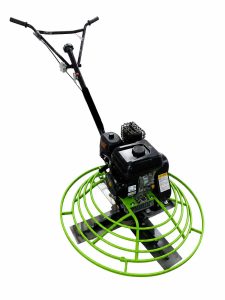
Walk-Behind Power Trowel: Daily Maintenance Guide
In this walk-behind power trowel maintenance guide, we will cover daily checks, cleaning, lubrication, and common troubleshooting tips to keep your machine in top condition.
1. Pre-Use Daily Check (Before Every Shift)
These checks take just a few minutes and prevent 90% of common breakdowns.
- Engine & Fuel System
- Check the engine oil level (on level ground). Top up with the recommended grade if low.
- Inspect the fuel level. Use clean, fresh gasoline and avoid running the tank dry.
- Check the air filter. Clean or replace it if clogged with dust or concrete debris.
- Trowel Blades & Components
- Inspect the blades for wear, bends, cracks, or missing fasteners.
- Check blade pitch adjustment. Ensure it moves freely and locks securely.
- Inspect the safety guard (green ring in the photo) for damage or loose bolts.
- Control & Safety
- Test the throttle and on/off switch. Ensure they work smoothly.
- Check the emergency stop/kill switch function.
- Inspect the handlebar for cracks or loose connections.
2. Post-Use Daily Cleaning & Care (After Every Shift)
Concrete residue is corrosive. Clean it off every day to prevent it from hardening and damaging parts.
- Clean the Machine
- Use a stiff brush and water (low-pressure only) to wash off all concrete, dust, and debris.
- Never use a high-pressure washer directly on the engine, carburetor, or electrical components.
- Wipe down the engine, controls, and fuel tank with a clean cloth.
- Lubricate Moving Parts
- Apply light oil or grease to blade hinges, pitch adjustment levers, and control cables.
- Lubricate wheel axles (if equipped) to prevent rust and ensure smooth movement.
- Secure for Storage
- Store the machine in a dry, covered area to protect it from rain and moisture.
- If storing for more than a week, drain the fuel tank or add a fuel stabilizer.
3. Weekly Maintenance
- Check engine oil and fuel filters. Replace if dirty or contaminated.
- Inspect all bolts and nuts on the engine, guard, and blades. Tighten any loose fasteners.
- Check the spark plug. Clean or replace it if fouled.
- Inspect the belt (if applicable) for wear, cracks, or tension.
4. Monthly Maintenance
- Change the engine oil according to the manufacturer’s schedule (typically every 50-100 hours).
- Inspect the engine air filter housing and clean the intake system.
- Check blade wear. Replace excessively worn blades in pairs to maintain balance.
- Inspect the engine cooling fins for debris. Clean them to prevent overheating.
5. Critical Safety Tips
- Always disconnect the spark plug wire before performing any maintenance.
- Never work on the machine while it is hot or running.
- Use only manufacturer-recommended replacement parts.
- Wear safety glasses, gloves, and closed-toe shoes when cleaning or servicing.
6. Troubleshooting Common Issues
- Engine Won’t Start: Check fuel level, spark plug, air filter, and battery (if electric start).
- Vibration or Rough Operation: Blades are out of balance, loose, or worn unevenly.
- Slow Speed or Poor Performance: Clogged fuel filter, dirty carburetor, or air intake restriction.
- Blades Not Adjusting: Check for concrete buildup or seized linkages.
By following this daily maintenance routine, you’ll keep your walk-behind power trowel running smoothly, avoid costly downtime, and ensure safe, consistent results on every job site.